
GHK-Cu: the complete guide to the copper peptide behind GLOW
GHK-Cu is one of the most researched peptides in skin science. Here is what the copper peptide actually is, how it works, and why it sits at the heart of the GLOW blend.
If you have looked into peptides for skin, recovery or healthy ageing, you have almost certainly come across GHK-Cu. The copper peptide has been studied for more than fifty years, appears in hundreds of published papers, and is the primary active in the GLOW peptide blend. This guide explains what GHK-Cu is, how the copper tripeptide is thought to work, and what the research says about its role in collagen, skin firmness, hair and tissue repair.
Important: GHK-Cu is supplied strictly for laboratory and educational research. Nothing below is medical advice or a treatment claim. Peptides referenced are investigational and not approved for human consumption.
GHK-Cu at a glance
- What it is: a copper-binding tripeptide (glycine, histidine, lysine) that occurs naturally in the human body.
- Why it matters: studied for collagen synthesis, skin remodeling, wound healing and hair follicle support.
- The copper part: GHK carries copper into cells, and copper is essential to many skin repair enzymes.
- In GLOW: GHK-Cu is combined with BPC-157 and TB-500 in a 70mg regenerative research blend.
ON THIS PAGE
What is GHK-Cu?
GHK-Cu is a small copper-binding peptide. The GHK part is a tripeptide, three amino acids joined together: glycine, L-histidine and L-lysine. The "Cu" is a copper(II) ion held tightly by that tripeptide. Put simply, GHK-Cu is the copper tripeptide, a single peptide carrying a single atom of copper.
What makes GHK-Cu unusual is that it is not a synthetic invention. It occurs naturally in human blood plasma, saliva and urine. It was first isolated by Dr Loren Pickart in 1973, who noticed that a fraction of human plasma could make aged liver tissue behave more like young tissue in the laboratory. The active fraction turned out to be GHK. Researchers later observed that levels of GHK in the body decline with age, from roughly 200 nanograms per millilitre in your twenties to around 80 by your sixties. That decline lines up with the slowing of skin repair as we get older, which is part of why the copper peptide attracted so much research interest.
How GHK-Cu works
GHK-Cu is best understood as a signalling and delivery molecule. Research points to a few overlapping mechanisms.
Copper delivery. Copper is a cofactor for enzymes involved in building and cross-linking collagen and elastin, the proteins that give skin its structure and bounce. GHK has a very high affinity for copper and shuttles it to where cells can use it, which is one reason the copper peptide is so closely tied to repair processes.
Stimulating the matrix. In laboratory studies GHK-Cu has been shown to stimulate the production of collagen, elastin and glycosaminoglycans (the cushioning molecules in skin), and to support the fibroblasts that manufacture them. It also appears to influence the balance between building tissue and breaking it down.
Resetting gene expression. Some of the most cited work, including gene profiling research by Pickart and colleagues, suggests GHK can shift the activity of a large number of human genes toward a healthier, more youthful pattern, switching on repair pathways and dialing down some inflammatory and stress signals. This systems-level effect is what excites researchers most, because it goes beyond a single target.
Antioxidant and anti-inflammatory activity. GHK-Cu has been studied for its ability to neutralise reactive oxygen species and to calm inflammatory signalling, both of which are central to how tissue recovers from damage.
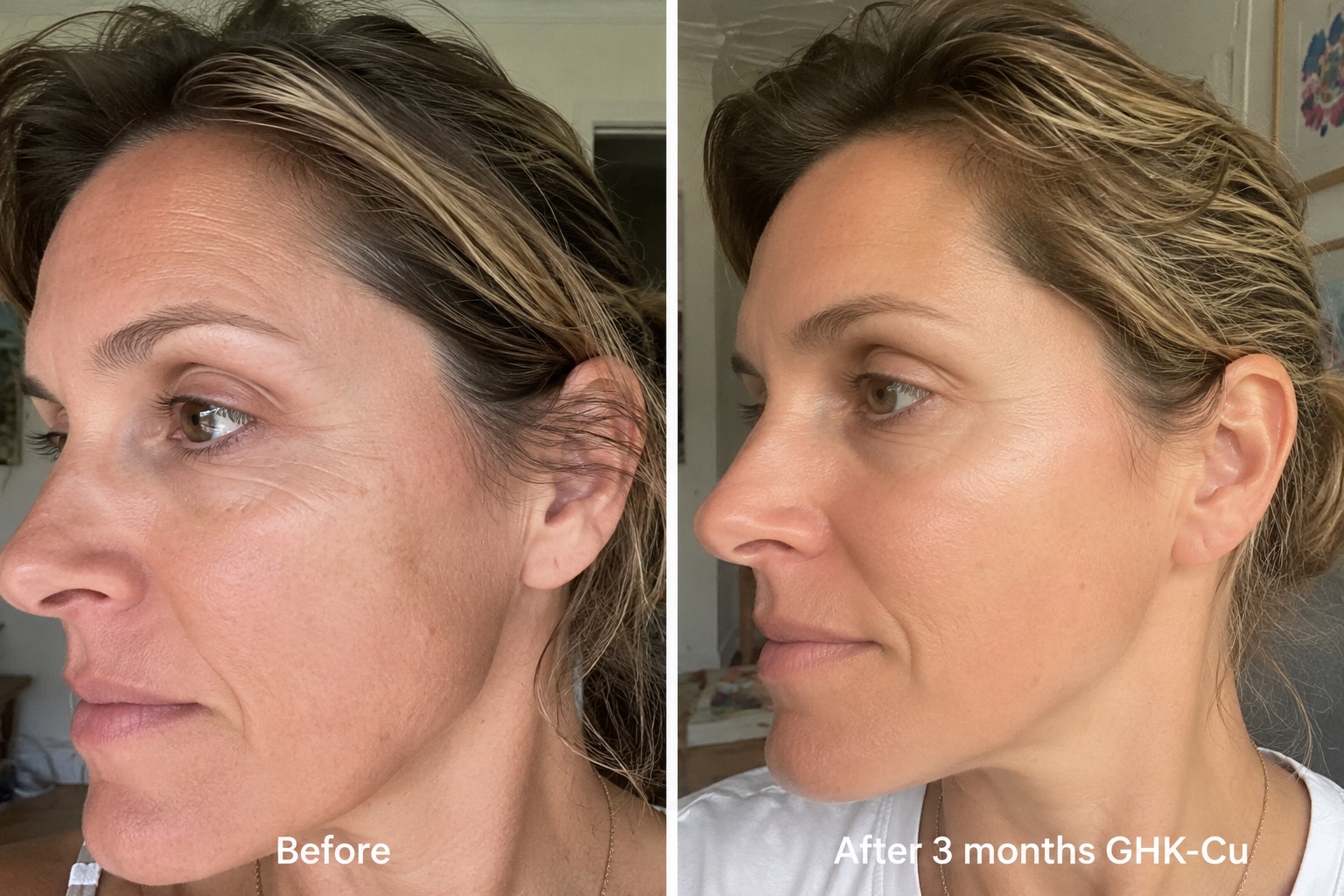
GHK-Cu and skin
Skin is where the copper peptide earned its reputation. Across published research, GHK-Cu has been studied for a cluster of related effects:
- Supporting collagen and elastin production for firmer, more elastic skin
- Improving the look of fine lines and skin thickness in ageing and photodamaged skin
- Helping the skin barrier and overall skin density and tone
- Reducing the appearance of damage from sun exposure and oxidative stress
This is why GHK-Cu became a staple ingredient in serious cosmeceutical formulations long before the current peptide wave. The same properties that help skin repair after injury are the ones associated with smoother, firmer, healthier looking skin over time. In a research context, GHK-Cu is studied both as a topical and as a reconstituted peptide.
GHK-Cu and hair
The copper peptide is also studied in hair research. GHK-Cu has been observed to enlarge hair follicles and extend the growth phase of the hair cycle in laboratory and animal models, and copper peptides have been investigated for their effect on follicle size and the appearance of thicker hair. Because the same repair and matrix-building pathways are involved, hair is a natural extension of the skin research, and it is one of the reasons GHK-Cu shows up so often in peptide discussions.
Tissue repair and recovery
Beyond skin and hair, GHK-Cu has a long history in wound healing research. Studies have looked at its role in attracting repair cells to a site of injury, supporting the formation of new blood vessels (angiogenesis), and improving the quality of healed tissue. This regenerative angle is exactly why GHK-Cu pairs so naturally with recovery peptides, and it sets up the logic behind the GLOW blend.
GHK-Cu in the GLOW blend
At NovaPeptides, GHK-Cu is the lead peptide in GLOW, our regenerative research blend. Rather than GHK-Cu on its own, GLOW combines three peptides that are each studied for skin, recovery and tissue repair, so the research story is broader than any single one.
The idea behind a blend is synergy: GHK-Cu brings the copper-driven skin and collagen research, while BPC-157 and TB-500 add their own well-studied recovery and repair profiles. Together they make GLOW one of the most complete regenerative research kits we offer.
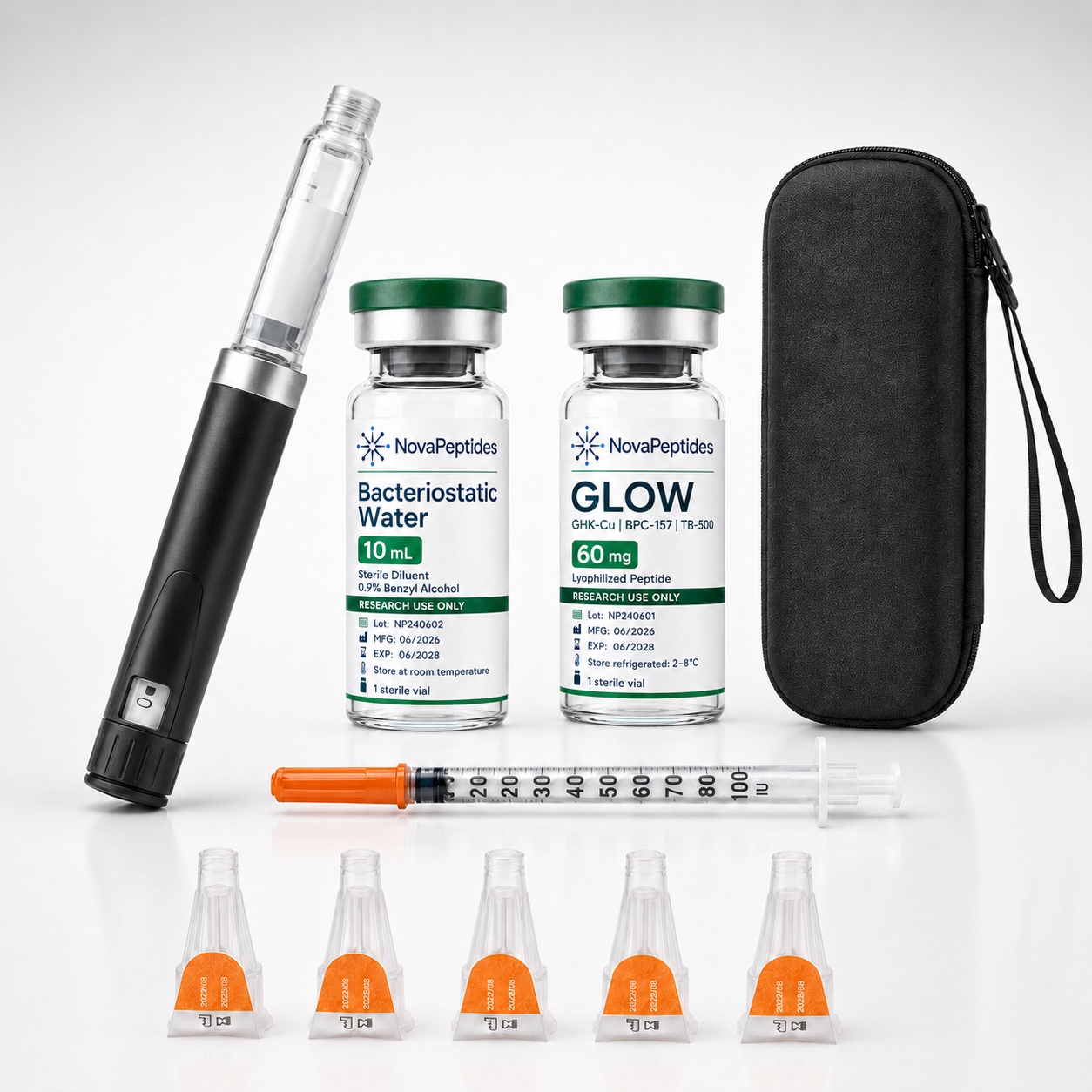
GLOW · GHK-Cu blend
A 70mg regenerative blend of GHK-Cu, BPC-157 and TB-500, supplied as a complete research kit with a verifiable Janoshik COA. Research use only.
Enquire about GLOWResearch handling and reconstitution
GHK-Cu and the GLOW blend ship as a lyophilised (freeze-dried) powder. In a research setting it is reconstituted with bacteriostatic water before use. For GLOW, reconstituting the 70mg blend with 2mL of bacteriostatic water gives a working concentration where each 0.01mL click on a U-100 pen delivers 0.35mg of the blend.
We keep the full click-by-click maths, including how the 70mg GLOW blend converts to clicks on a U-100 pen, on our interactive pen and dosing guide. It is provided for research reference only and is not a recommendation for human use.
Purity and testing
With copper peptides, quality is everything, because identity and purity determine whether research is meaningful. Every NovaPeptides batch, including the GHK-Cu in GLOW, is independently tested by Janoshik, one of the most trusted peptide analysis labs in the world, and ships with a verifiable Certificate of Analysis for purity, content and identity.
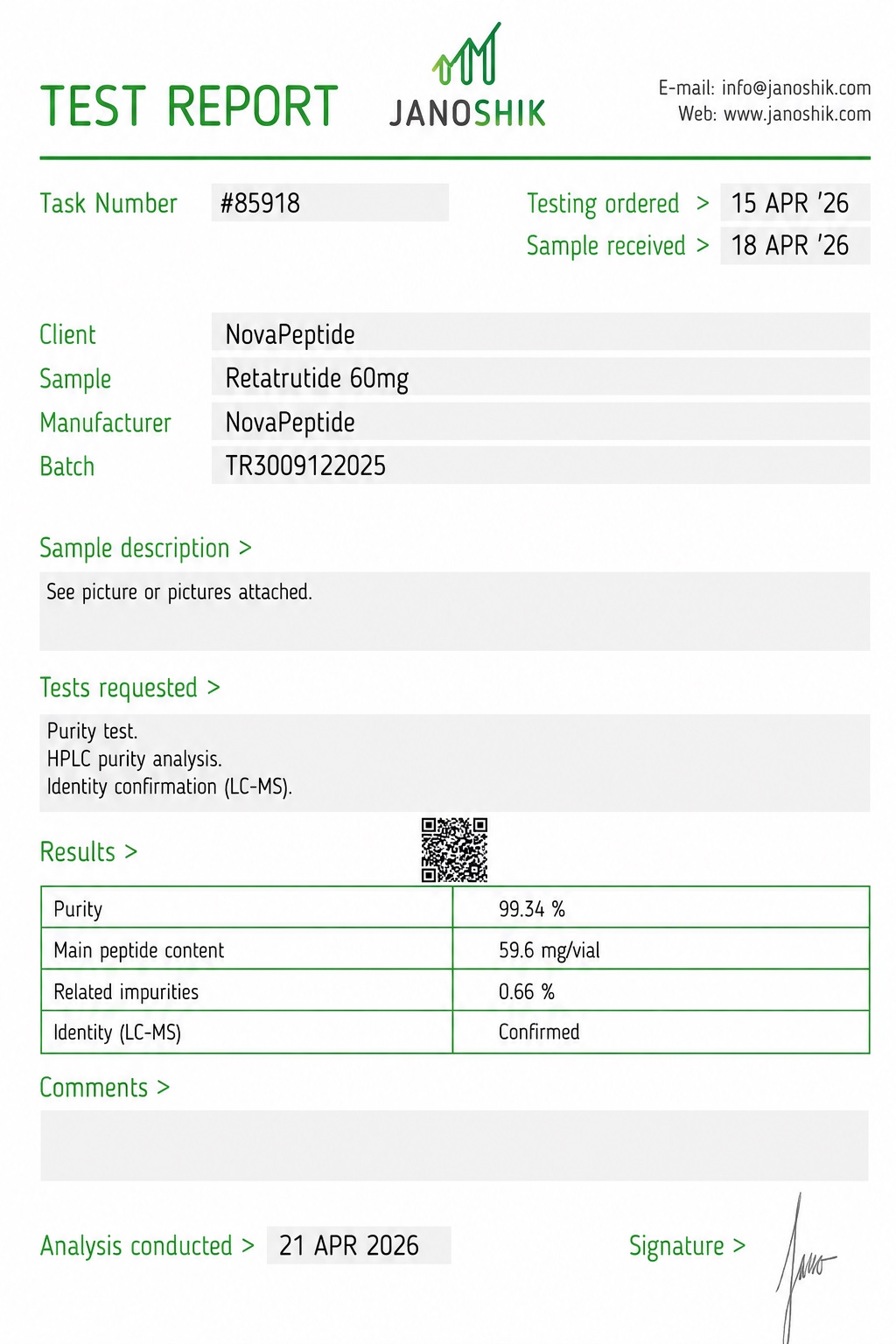
Every GHK-Cu batch is tested
No smoke, no mirrors. Each batch is independently verified by Janoshik for purity, content and identity. Ask us and we will send the report.
GHK-Cu FAQ
What is GHK-Cu?+
GHK-Cu is a copper-binding tripeptide made of glycine, histidine and lysine bound to a copper ion. It occurs naturally in human plasma and is one of the most studied peptides in skin and tissue repair research. Supplied for research use only.
What is GHK-Cu studied for?+
In published research GHK-Cu has been studied for collagen and elastin production, skin firmness and elasticity, wound healing, hair follicle support, antioxidant activity and anti-inflammatory signalling. It is for laboratory and educational research only.
Is GHK-Cu the same as the GLOW peptide?+
GHK-Cu is the primary peptide in NovaPeptides GLOW. GLOW is a 70mg regenerative blend that pairs GHK-Cu with BPC-157 and TB-500, three peptides studied together for skin, recovery and tissue repair.
How is GHK-Cu reconstituted?+
Researchers reconstitute the freeze-dried peptide with bacteriostatic water. The GLOW 70mg blend reconstituted with 2mL gives 0.35mg of blend per 0.01mL click on a U-100 pen. See our pen and dosing guide for the full maths. Research use only.
Can I get GHK-Cu in Australia?+
NovaPeptides supplies GHK-Cu within the GLOW research kit and ships Australia-wide from the Gold Coast, with a verifiable Janoshik Certificate of Analysis on every batch. Supplied strictly for research and educational use.
Researching GHK-Cu or GLOW? Talk to us.
Reach out and we will walk you through GLOW, the COAs, reconstitution and how the kit goes together.
GHK-Cu and GLOW, shipped Australia-wide
We dispatch from the Gold Coast with tracked express shipping to every state and territory. Find your location: